All Categories
Featured

The Comprehensive Guide on 2026 Medicare Options
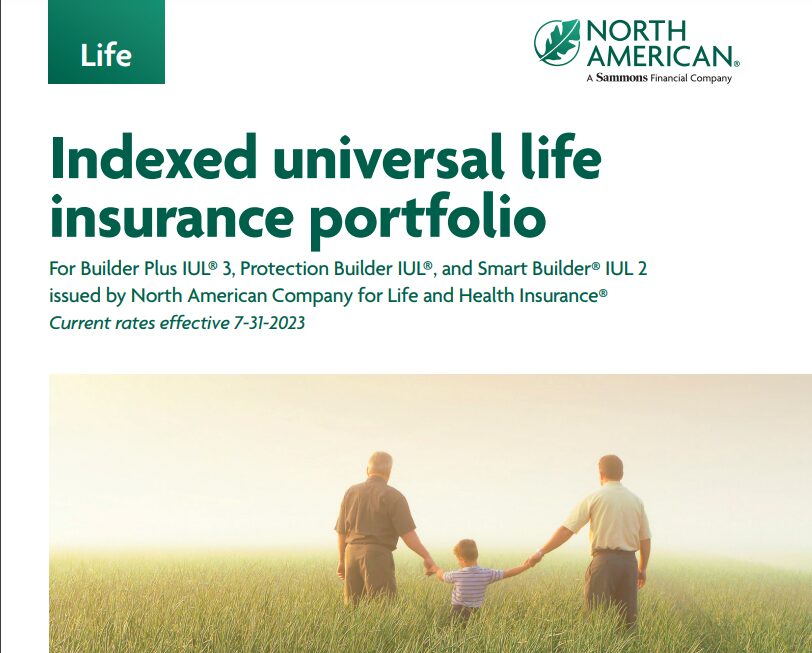
The cost of an indexed universal life insurance coverage policy varies, depending on elements like your age, where you live, your health and the coverage amount you select. According to one quote, a healthy, nonsmoking 34-year-old female may pay between$71 and $96 a month for an indexed universal life policy, presuming$250,000 of coverage. The exact same person might pay$32 to$44 a month for a term life policy and between $177 and$245 per month for a whole life policy.
It's likewise a great choice if you believe you'll need to change your premium and death benefit. You may not require a life insurance coverage policy after you have actually paid off your financial obligations and saved for your big financial objectives, like retirement and your kid's college education. In these scenarios, a term life insurance coverage policy with a separate retirement fund and other cost savings lorries might offer what you require, and at a lower cost. An independent representative can walk you through your alternatives to find the ideal protection amount for the very best price with a reliable insurance provider. When you have a couple of quotes, you ought to: Compare coverage limits, approximated month-to-month payments and administrative or management costs that feature each policy. Choose a policy and an insurance provider. The business may ask you to go through a phone interview or medical examination. As soon as approved, begin paying premiums regularly. Indexed universal life insurance coverage uses long-term protection with a survivor benefit and a cash worth that grows based on underlying financial investments. You can either allocate the money value part in a repaired account, an indexed account or both.
Instead, the insurance business utilizes the index as a standard to identify how much interest to credit to the money value part of your policy. If the index has a bad year, your credited interest might be lower(sometimes even 0%), depending on your policy's terms. If your policy credits the.
full 10Complete, your cash value could worth might Make5,000 in interest before fees and policy charges.
Expect your policy has a 10 %cap, and the market index gains 15%that year. Despite the fact that the index increased by 15 %, your policy would only be credited 10 % before fees and other policy charges. Numerous IUL policies have a 0 %flooring, meaning you will not lose money value simply since the underlying market index has an unfavorable year. For example, if the index falls 18%, your credited interest may be 0%rather of -18%. That stated, a 0 %floor secures you from market losses, not from policy expenses. A participation rate figures outhow much of the index's gain is credited to your policy. If your policy has an 80 %participation rate and the index increases 10%, you would get 8%interest (80%of the index's gain), presuming no cap limits the return. If the participation rate is 100 %, you would make the full 10 %as long as it does not surpass the cap. 2 policies tracking the same marketindex can produce extremely various outcomes depending upon how these features are structured. The majority of indexed universal life policies let you choose in between 2 kinds of death benefits: Your recipients get a repaired death advantage throughout the life of the policy. As your money value grows, it typically ends up being part of that total survivor benefit instead of being paid in addition to it.

Latest Posts

Key Tips for Selecting Final Expense Insurance
How to Get Free Individual Health Insurance Quotes

Finding Low-Cost 2026 Family Health Quotes